
Most advice about social media for tradies is useless because it answers the wrong question. It gives you thirty content ideas, a posting calendar and a list of trending audio, when the actual problem is much simpler.
You are not short of ideas. You are short of raw material.
At the end of the month, sitting down to post something, you have nothing to post, because the job that would have made a great post finished three weeks ago, the wall is closed up, the site is clean, and the only photo anyone took is a blurry one of an invoice.
The fix is not more discipline at the desk. It is thirty seconds of capture on site, and a method for turning one job into a month of posts.

Why “just post more” fails trades
Three reasons, and they are all structural rather than motivational.
You are on the tools, not at a desk. By the time you are somewhere you could write a post, you are tired and the job is behind you.
Finished work is unphotogenic without context. A perfectly installed switchboard means nothing to a homeowner who never saw the mess it replaced. The value is in the comparison, and the comparison only exists if someone took the first photo.
The good moment is brief. There is a window, maybe ten minutes, where the job is finished, the site is tidy and the light is decent. Miss it and it is gone, because you are not driving back across town for a photo.
So the system has to live on the job, in the hands of whoever is there. Everything else follows from that.
The one habit that changes everything
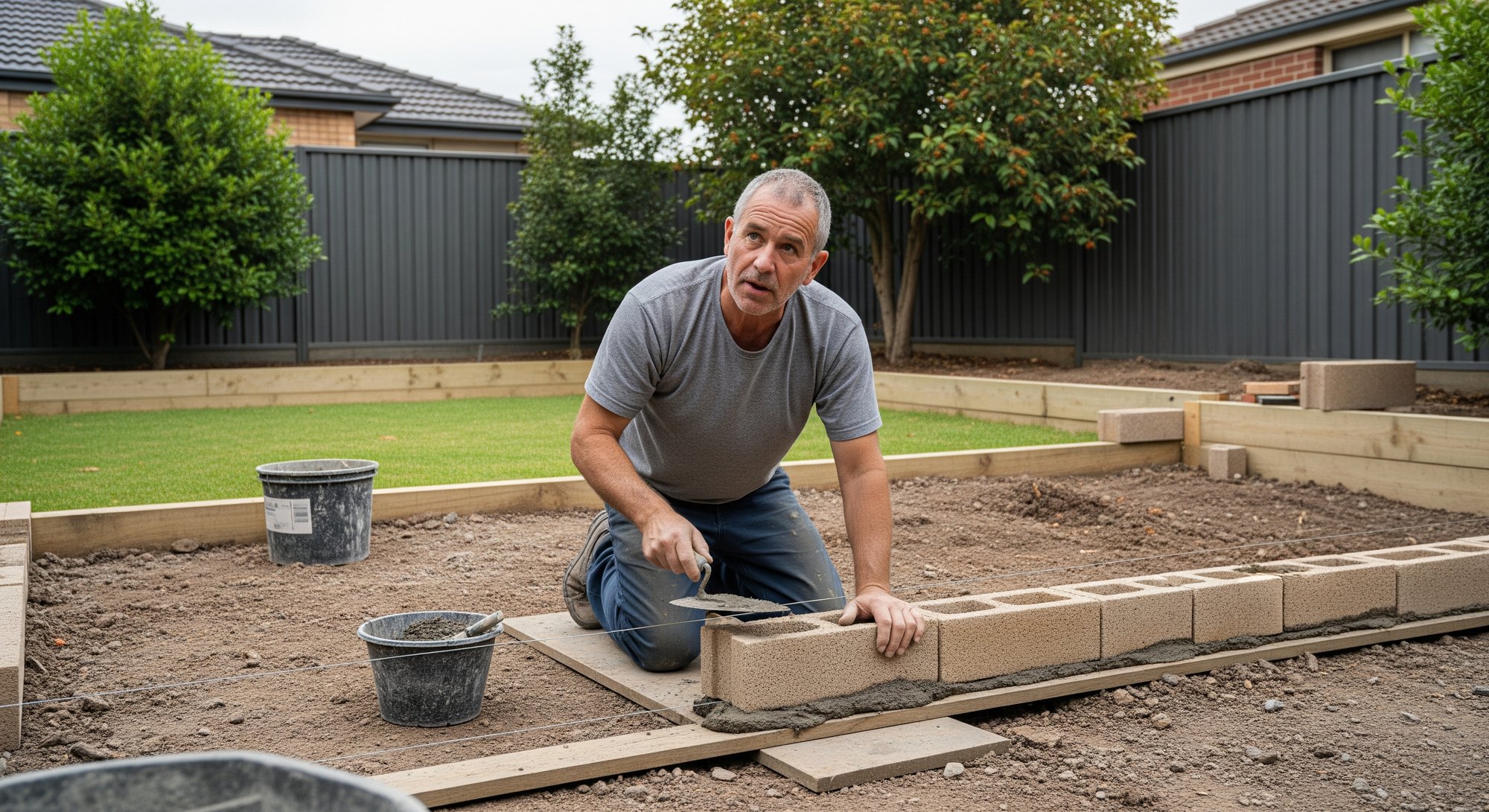
Before anyone touches anything on a new job: take three photos.
Not good photos. Not staged. Wide shot of the space, one of the actual problem, one of the general state of things. Fifteen seconds.
That single habit is the difference between having content and not having it, because the “before” is the only shot that is impossible to recreate later. Everything else you can catch on the way through.
Make it part of arriving, like putting down drop sheets. Some businesses make it a rule that the job does not start until the before photos are in the group chat.
The shot list - eight shots, one job
Here is what to capture across a normal job. None of it takes more than thirty seconds, and you are already standing there.
| Shot | When | Why it works |
|---|---|---|
| Wide “before” | WhenBefore you touch anything | Why it worksThe only shot you cannot take later |
| The problem, close up | WhenBefore you start | Why it worksShows customers what they are actually paying to fix |
| Work in progress | WhenWhile it is open or exposed | Why it worksProof it was done properly, not just covered over |
| A detail of the fiddly bit | WhenMid job | Why it worksThis is where craft shows. The part a rival would skip |
| Tools or materials laid out | WhenAny time | Why it worksReads as competence, and it is easy to shoot |
| Someone working | WhenMid job | Why it worksFaces outperform objects, every time |
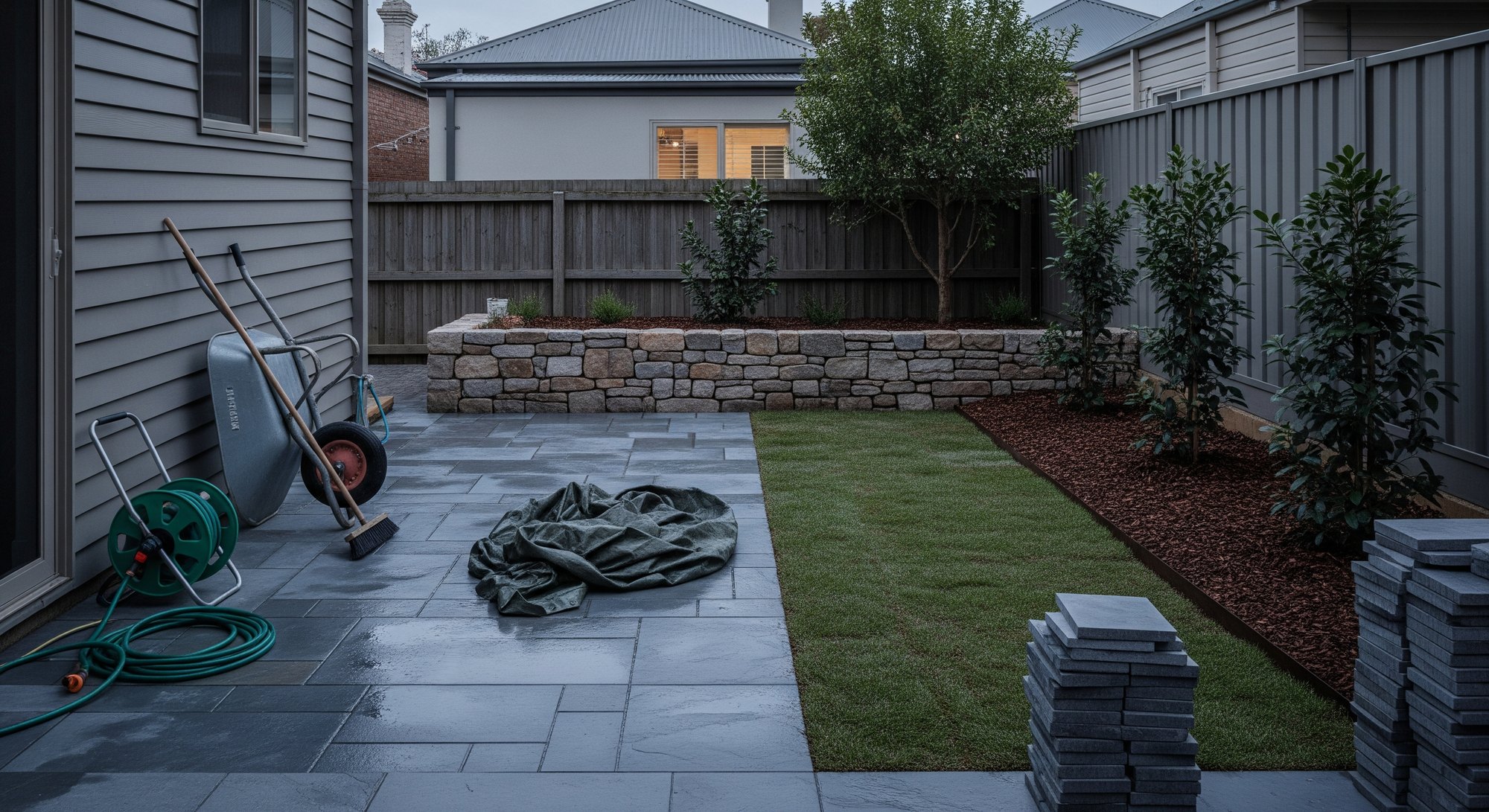
| Wide “after” | WhenJob finished, site tidy | Why it worksThe payoff shot, and the one that gets shared |
| The tidy-up | WhenJust before you leave | Why it worksUnderrated, a swept site is a selling point |
That is eight photos from one job. On a bigger project you might get twenty, but eight is the floor and eight is enough.
One rule that doubles the value: take the “after” from the same position and angle as the “before”. Matched framing is what makes a before-and-after land. Standing somewhere different halves the effect.
Turning eight shots into a month
Now the multiplication. One job, captured as above, becomes roughly twelve posts:
- The before shot alone: “This is what we walked into on Tuesday.”
- The problem close-up: explain what causes it and what it costs to ignore.
- A during shot: what the work actually involves.
- The detail: why you do it this way and not the cheap way.
- Before and after side by side: the highest-performing post you will make.
- The after, on its own: clean, no clutter, let it speak.
- The tidy-up: “we leave it how we found it.”
- A short video pan of the finished space, ten seconds, no narration needed.
- A question post: “how many of you have this in your place?” using the problem shot.
- A myth or mistake post: the thing homeowners get wrong about this kind of job.
- The person: a photo of whoever did the work, with a line about them.
- The customer’s words: if they said something kind, quote it (with permission) over the after shot.
Twelve posts. At three a week, that is a month. From one job.
And you have not “created content” once. You took photos of work you were doing anyway.
Writing the caption without agonising
This is where most people stall. The fix is a formula, used shamelessly:
What it was → what you did → what it means for them.
“This hot water unit had been leaking into the wall cavity for months. You could smell it before you saw it. Replaced the unit, repaired the sheeting and re-sealed the lot. If your hot water is taking longer than it used to, that is usually the first sign.”
Three sentences. Thirty seconds to write. No hashtag research, no hook formula.
A few things that genuinely help:
- Name the suburb. “In Reservoir last week” does more for local visibility and relatability than any hashtag.
- Write how you talk. If you would not say “elevate your space” out loud, do not type it.
- One useful fact per post. Give people something they did not know. That is what gets a post saved and shown to a partner.
- Do not sell in every post. Roughly one in five should ask for anything. The rest just show the work.
Where to put it
Same photos, four places, minimal extra effort:
- Instagram and Facebook: the obvious home. Meta for Business and Instagram’s business tools let you post to both at once, which halves the work.
- Your Google Business Profile: heavily underused. Posting job photos there feeds the listing customers actually see when they search, and it keeps the profile looking active.
- Your website gallery: the same photos become the project gallery that convinces someone at 9pm on a Sunday. This is the bit that outlasts the post, because a social post is gone in two days and a gallery page works for years.
That last point matters more than people think. Social gets you seen; your website gets you hired. When we built the site for Smarter Home Renovations, the job photography was the backbone of both. The same shots feeding the social feed and the project pages that do the actual persuading. Entertain Gardens works the same way: outdoor build projects that photograph beautifully and then keep earning on the website long after the post has scrolled away.
The permission conversation
You are photographing someone’s home. Ask.
Do it at quoting stage, not on the last day, when it is a favour instead of a formality:
“We sometimes photograph our work for our website and socials. We never show your address, street number or anything identifying, just the work. Happy for us to do that?”
Most people say yes without hesitating. Some say no, and that is the end of it, no persuading.
Then hold to it:
- No house numbers, street signs or letterboxes in frame.
- No cars, because number plates identify an address.
- No people who have not agreed to be photographed, including kids.
- No interiors beyond the work: nobody wants their laundry pile online.
- Never post an address, even vaguely, alongside a photo of an empty house.
Suburb-level is the right resolution: specific enough to be useful for local search, general enough that nobody can find the property.
A cadence you can actually keep
Two or three posts a week. That is it.
Consistency beats volume so heavily it is not close. Three a week, every week, will build an audience. Daily for two weeks then silence for two months will not, and the second pattern is what almost every small business actually does.
The businesses that sustain it do the same two things:
Batch the writing. Once a fortnight, sit down for twenty minutes with the photos from recent jobs and write all the captions at once. Schedule them. Then forget about it. Writing one post at a time, at night, on your phone, is how the habit dies.
Give it to one person. Not “the team”. A named person, whether that is you, an apprentice with a good eye, or someone in the office. Shared responsibility for content means no responsibility for content.
If you want a starting point: one job a fortnight captured properly is enough to post three times a week indefinitely.
What not to do
- Stock photos of somebody else’s work. People can tell, and it undermines every real photo beside it.
- Photos with the site a mess: unless the mess is the “before”, in which case it is the point.
- Posting the same shot repeatedly hoping nobody notices. They notice.
- Chasing trends that do not suit you. A dancing plumber is fine if that is genuinely you. If it is not, it reads as forced and the work gets lost behind it.
- Ignoring comments. Someone asking “what would that cost?” is a lead. Answer it, then move it to a message.
- Waiting for the perfect job. The ordinary job you did on Tuesday is more relatable than the showpiece you are hoping for.
Make it a system, not a burst
Everything above collapses into four habits:
- Three photos before anyone touches anything.
- Five more across the job, including one of a person.
- Matched “after” from the same spot as the “before”.
- Twenty minutes a fortnight to write and schedule.
That is the entire system. It costs a few minutes a job and it removes the “what do I post” problem permanently, because the answer is always: the work you did this week.
Frequently Asked Questions
How do tradies come up with social media content?
They stop trying to think of ideas and start capturing the work they are already doing. One job photographed properly (before, during, the problem, a detail, the finish, the tidy-up) yields eight to twelve posts. The bottleneck is almost never imagination. It is that nobody took photos while the job was happening, so at the end of the month there is nothing to post.
How many photos should I take on a job?
Aim for eight to fifteen across the whole job, not a hundred at the end. Two or three before you start, a few while the work is exposed, one or two close-ups of the fiddly part, and three or four when it is finished and tidy. Take them on your phone as you go: thirty seconds each, not a photo shoot.
Do I need permission to post photos of a customer’s property?
Yes, ask, always. It takes one sentence at quoting stage and it avoids an awkward conversation later. Say you sometimes photograph your work for your website and social media, and that you will never show their address, street number, car or anything identifying. Most people say yes immediately. Some say no, and you respect that without pushing.
How often should a small trade business post?
Two or three times a week is plenty, and consistency matters far more than frequency. Posting three times a week every week beats posting daily for a fortnight and then vanishing. If two a week is what you can genuinely sustain through a busy month, do two a week.
Are before and after photos still effective?
Yes, they remain the single best performing format for trades and home services, because they show the outcome the customer is actually buying. The trick is that the before photo has to be taken before you start, which is the step most people miss. Set a rule that nobody touches anything until the before shots are done.
The bottom line
The reason your feed is empty is not that you lack ideas. It is that the raw material walked out the door with the finished job.
Fix the capture and the content problem solves itself. Three photos before you start, five across the job, one matched “after”, and twenty minutes a fortnight at the keyboard. One job becomes twelve posts, and twelve posts is a month.
None of it requires you to be interesting on camera, learn an editing app, or work out what the algorithm wants this week. It requires you to photograph work you are already proud of, and then say plainly what you did and why it mattered.
Looking to grow your business? Book a strategy session with 7 Marketing, we’ll look at your social media marketing alongside the website that turns those followers into jobs. Request a chat or get in touch, and have a look at the trade businesses we’ve done this for.