
Most advice about getting reviews rests on a single idea: ask at the moment of relief. The blockage clears, the power comes back on, the keys go back in the hand, and while the customer is still pleased you ask them there and then.
It is good advice and it works. We have written our own version of it in why reviews matter for local SEO, which covers what a good review looks like, how to respond to the bad ones and what is actually illegal in Australia.
But it assumes something that is often not true down here. It assumes you and the customer were both standing in the same room when the job finished.
On the Peninsula a large share of work is done for people who were ninety minutes away at the time. The job was authorised by text, you got in through a lockbox or a neighbour, and the owner found out it was finished when your invoice arrived. There is no moment of relief to ask in, because the moment happened without them.
That does not make the review impossible. It means the standard playbook needs adjusting, and almost nobody adjusts it.
Work out who your reviewable customer actually is
Before anything else, be clear about who you are asking, because absentee jobs usually involve more people than a normal one.
The owner who paid. Almost always the right answer. Their review is legitimate, it is theirs to give, and it carries the most weight because they are the customer.
The agent who arranged it. If a property manager books and pays you, they are your customer and their review is genuine. They are also worth far more than one review, because an agent who likes you books you again all year. Ask them once, properly, and then stop asking.
The neighbour who let you in. Not your customer, however helpful they were. Do not ask them to review a job they did not buy.
The tenant or the guest. Same answer. They experienced the work but did not commission it.
The rule worth keeping is simple: one job, one review, from the person who paid. Two reviews from connected parties for the same piece of work is exactly the pattern that gets a profile flagged, and Google’s own guidance on reviews is clear enough about it that risking your profile for one extra star is a bad trade.
Manufacture the moment they missed
Here is the single most useful change, and it costs about a minute a job.
For a customer who was not there, the moment they learn the job is done is the moment your message arrives. That is their moment of relief. So make that message do the work that standing in their kitchen would have done.
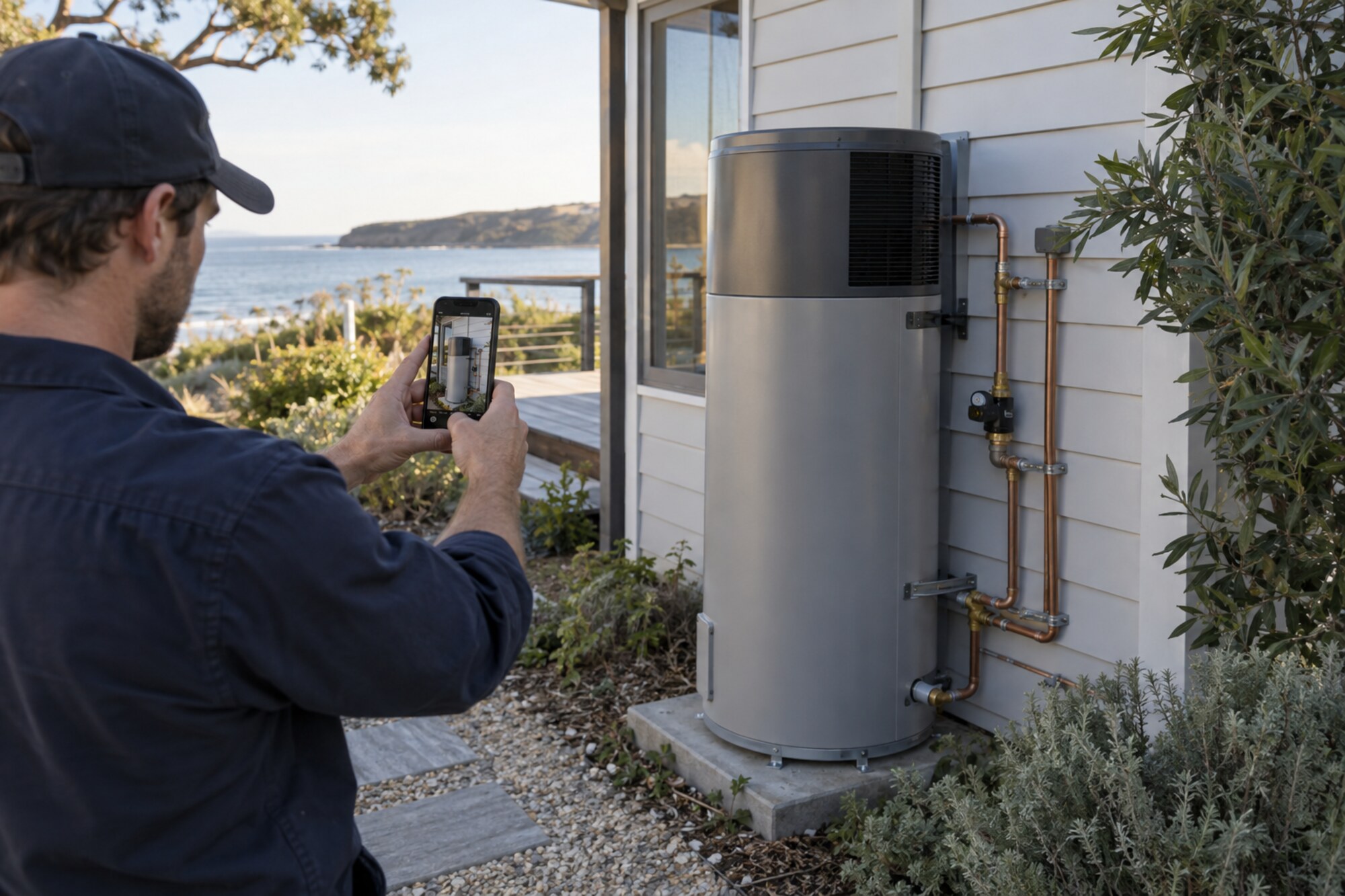
Send the finished photo. Not a report, a photograph. The new hot water unit in place, the cleared gutter, the deck without the broken board, the switchboard closed up and tidy. For somebody who has been worrying about a house they cannot see, a photo of it sorted is genuinely a relief, and it lands far harder than “job complete, invoice attached”.
Add two lines of what you did and anything they should know. Then stop.
Ask in the next message, not that one. Let the photo land on its own. A day later, or when they reply, is when you ask. A message that delivers good news and requests a favour in the same breath converts worse than two messages that each do one thing.
That is the whole technique. It works because it restores the sequence the standard advice relies on: they feel pleased, and then you ask.
In practice it reads like this. The first message: a photo of the finished unit, then “All done. Replaced the unit and the isolating valve, ran it up and checked for leaks. The old one had been leaking a while so there is some staining on the wall that will not come back.” The second, a day later: “Glad that is sorted. If you have got a minute, a Google review genuinely helps us, and it helps if you mention the job and the suburb. Here is the link.”
Neither message is clever. The value is entirely in them being separate.
Ask when they arrive, not when you finish
The other adjustment is timing, and it is the one that suits holiday-home work especially.
A Melbourne owner who gets an invoice in June feels administrative about it. The same owner walking into the house in December, finding the hot water working and the garden under control and nothing to deal with on their first night down, is at their most warmly disposed toward you all year.
So for work done well ahead of a season, a short message timed for the week they arrive is worth more than three sent at completion. Something plain: hope the place was right when you got there, let me know if anything needs a look while you are down. Most people will reply. Some of those replies are the opening to ask.
This takes a note in a calendar and nothing else, and it is the closest thing to a free review going.
 This is the moment they are most pleased with you, and it is weeks after you finished. Ask then.
The season fights you, so stop fighting it
The compressed season creates a second problem. You do a large share of the year’s work in a handful of weeks, which is precisely when you have no time to ask anybody for anything, and neither do they.
The usual result is a business that collects a clump of reviews in January and nothing for the rest of the year. That is worse than it sounds. Recency counts, and a profile whose reviews all arrived in one burst eleven months ago reads as a business that had a good summer once.
The fix is to decouple the asking from the doing.
- Capture, do not ask, during the peak. A name, a date and the job in a notes app as you go. Ten seconds each.
- Work the list in the quiet months. March and April are ideal. Nobody minds being asked about a job from January, and you finally have the time to do it properly.
- Aim for a trickle, not a burst. A handful a month across the year beats twenty in one fortnight, both for how the profile reads and for how it ranks.
This also solves the problem of asking while you are exhausted, which is when it does not get done at all.
When you never had a moment to begin with
Some jobs have no good moment in them anywhere. Emergency work at eleven at night, a repair the customer resented paying for, a job for an owner who deals with you entirely through an agent and has never heard your voice.
For those, the honest answer is to let them go and get your value elsewhere. Photographs of the finished work, permission to use them, and the repeat booking are all evidence, and a repeat booking is worth considerably more than the review would have been. Our piece on what wins the callback covers how much of that work is decided before anyone meets.
Chasing a reluctant customer through three follow-ups costs goodwill you will want the next time their hot water fails. Put the effort into the people who reply to messages, because they were always the ones who were going to do it.
The bad review you get for something you did not do
There is a failure mode specific to working for people who were not there, and it is worth knowing before it happens to you.
An absentee owner judges the job on what they find weeks later, not on what you actually did. The lawn you cut in November is long again by January. The leak you fixed is dry, but the staining on the wall is still there. The gutter you cleared has filled with tea tree since. From ninety minutes away, all three can look like work that was not done properly.
Two things make this manageable, and both happen before the review, not after.
Say what will not look fixed. If the stain stays, the plaster needs painting, or the garden will need doing again before they arrive, put it in the completion message. An expectation set in writing in November is the thing that stops a one star review in January.
Keep the photo. A dated photograph of the finished work is the calmest possible reply to somebody who believes nothing happened. Not as ammunition, as reassurance. Most of these complaints are genuine confusion rather than bad faith, and a photo usually ends them in one message.
If one does land anyway, reply the way you would to any other, which our main reviews guide covers properly. Calm, specific, no argument. The reply is not for the person who wrote it, it is for the next customer reading it.
What the reviews need to say once you get them
One last thing that matters more here than elsewhere. Ask for the suburb.
A review that says the job was in Rye or Blairgowrie does something a five star rating with no detail cannot: it proves you actually travel there. On a peninsula an hour long, where local results weight how close the searcher is standing above nearly everything else, that proof is worth having. We set out why in why you rank in Mornington but not in Rosebud.
The phrasing that works is a question rather than a request. “Would you mind mentioning what we did and which suburb?” gets you a useful review. “Could you leave us a review?” gets you “Great service, highly recommend”, which helps nobody.
And make sure the profile they are reviewing is in order before you send anyone to it. Our Google Business Profile checklist is an afternoon’s work and it is the other half of this job.
Frequently Asked Questions
How do I ask for a review when I never met the customer?
Send the finished photo. For someone who was not there, the photo is the moment they find out the job is done and it lands with the same relief as watching you pack up would have. Attach a short note saying what you did and what to watch for, then ask in the next message rather than the same one. Two messages convert better than one that does both jobs at once.
The agent booked the job, so who do I ask for the review?
Ask the agent who actually pays your invoice, because that is your customer and their review is legitimate. If the owner paid directly, ask the owner, and it is usually worth asking the agent to pass your details on rather than trying to reach around them. Never ask both to review the same job. Two reviews for one piece of work from connected parties is the kind of thing that gets a profile flagged.
When is the best time to ask a holiday-home owner?
When they next come down and see it, not when you finish. A Melbourne owner who gets your invoice in June feels nothing much. The same owner walking into the house in December, with the hot water working and the deck clear, is at their most pleased with you. A short message timed for the week they arrive is worth more than three sent at completion.
How do I keep reviews coming when the season is so compressed?
Stop trying to ask during it. Through the peak weeks you have no time and neither do they, so capture the names and dates as you go and work through them in March when it quietens down. A steady trickle across the year is also better for you than a clump in January, because a profile with reviews spread over twelve months reads as an active business rather than one that had a good summer once.
What if a customer genuinely will never leave a review?
Plenty will not, and chasing them costs goodwill you will want later. Get what you can from the job instead. Photos of the finished work, permission to use them, and the repeat booking are all evidence, and the repeat booking is worth more than the review was. Put your effort into the customers who reply to messages, because they are the ones who were ever going to do it.
The bottom line
The standard advice is not wrong, it is just written for a job where everyone was present. Down here a lot of them are not.
So rebuild the sequence rather than skipping it. The completion photo is the moment of relief for someone who was not there. The week they arrive is when they are most pleased with you. The quiet months are when you have time to ask about the busy ones. And the review you want mentions the job and the suburb, because on a peninsula that detail is doing work a star rating cannot.
None of it takes long. It is a photo, a note in a calendar and an hour in March.
If you would like the rest of the picture, why reviews matter for local SEO covers the fundamentals, and how we approach this down here is on our Peninsula SEO page. You can see the sort of businesses we do it for across our client projects, including Funkesound in Frankston.
If your profile has three reviews and you are not sure where to start, request a chat and we will go through it with you. Prefer to start in writing? Get in touch through our contact page.