

Who we are
We design and develop exceptional WordPress, eCommerce and Business Websites, that create amazing value for our clients.
Why Choose Us
Featured Works


In their words
What People Say
Thanks for providing me with ongoing assistance to build my business and being my sounding board. You have done an amazing job with my website and I have received numerous emails about how much easier it is to navigate around the page but also how fantastic it looks.
Naomi - Unome Security
With a massive increase in leads and quotes whats not too like. We have a solid market presence on all our keywords whilst keeping our Google Ads spend down to a minimum. Hiring 7M to run our online and CRM has been a game changer.
Ev - Worm Farm Waste Systems
7 Marketing built our website and helped us strengthen our online presence. The difference has been clear, more enquiries and steady growth in the business. They're professional, transparent, and genuinely focused on helping small businesses succeed.
Alan - Aussie Backflow
What you get
What a tradie website actually has to do
We come from a trade background, so this list is what actually wins work on the tools rather than what looks good in a portfolio. Most tradie websites fail at the same few things. These are the six we build for, in the order they matter.
Built around the quote request
Every page is built backwards from the thing you want to happen: a call, a quote request, a booking. Decoration that does not move somebody toward one of those gets cut.
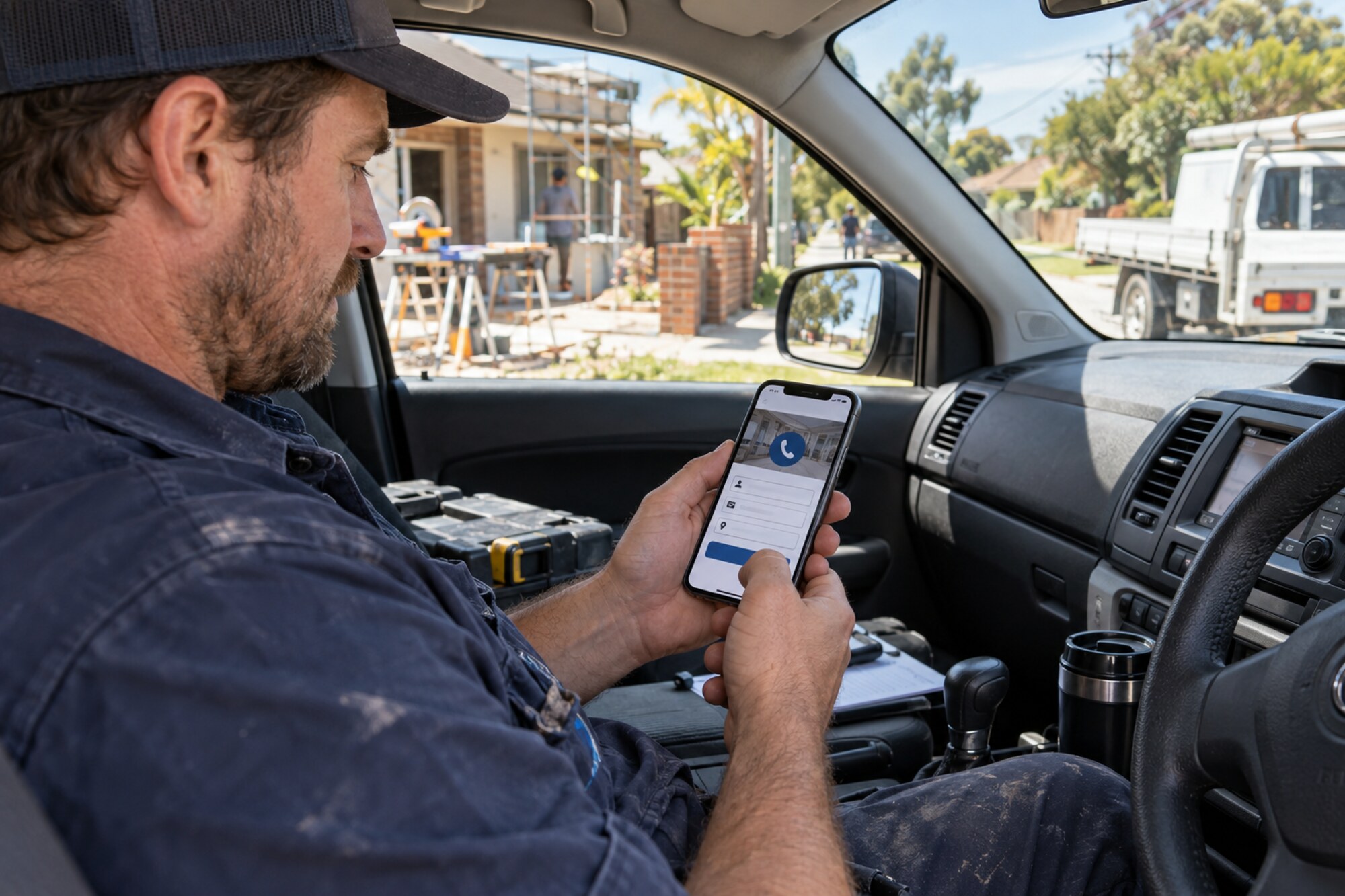
In practice that means a phone number that is tappable on every screen, a form short enough that somebody fills it in from a ute at lunchtime, and no dead ends where a visitor has read enough to be interested and has nothing obvious to do about it.
It matters more than the design does. Winning the job is usually decided after the enquiry lands, which is why we wrote what wins the callback about the part that happens next.
The service areas you genuinely cover
Real pages for the places you actually work, each saying something different, rather than fifteen near-identical suburb pages with the name swapped. That second pattern is the doorway approach Google has spent a decade learning to ignore.
Being honest about where you stop is worth money too. It saves you quoting jobs you never wanted and saves a customer waiting on a reply that was never coming. If you charge travel past a certain point, the site should say so.
This also decides where you can realistically be found, because local results weight how close the searcher is standing above almost everything else. Why you rank in one suburb and not the next explains what that means for a service area business.
Photos of your work, not stock
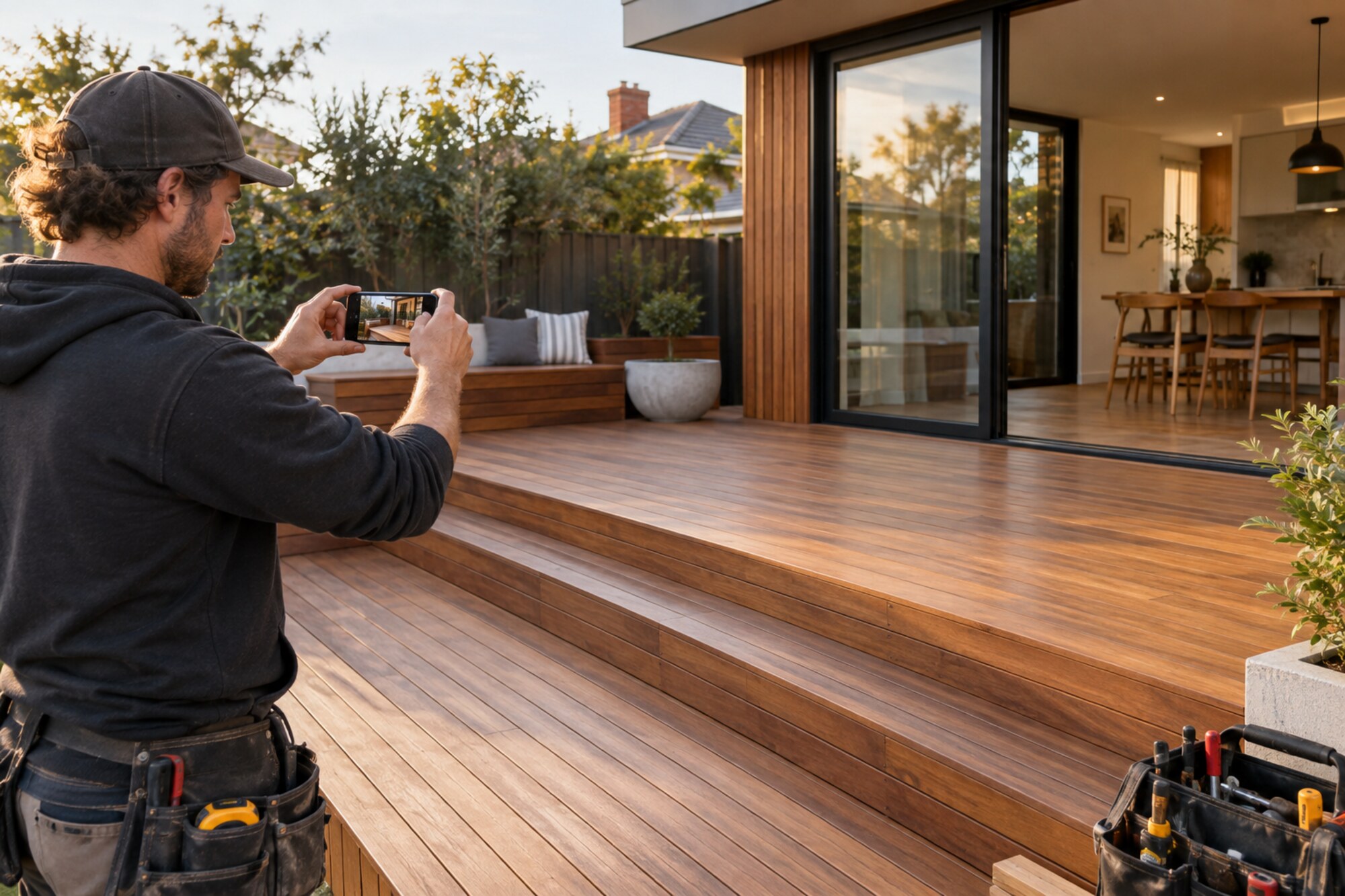
Twelve honest photos of finished jobs beat any stock image of a spanner. Phone photos taken on site are fine, and they are better than fine if the alternative is a stranger in a hard hat who has never been to your workshop.
For customers who cannot meet you at the property, and on a lot of jobs that is most of them, your gallery is doing the work a site visit would otherwise do. It is the cheapest credibility on the whole site.
The same habit feeds everything else you might do later. A month of content from one job is the method we hand clients for getting it done without it becoming a second job.
Fast on a phone, on bad reception
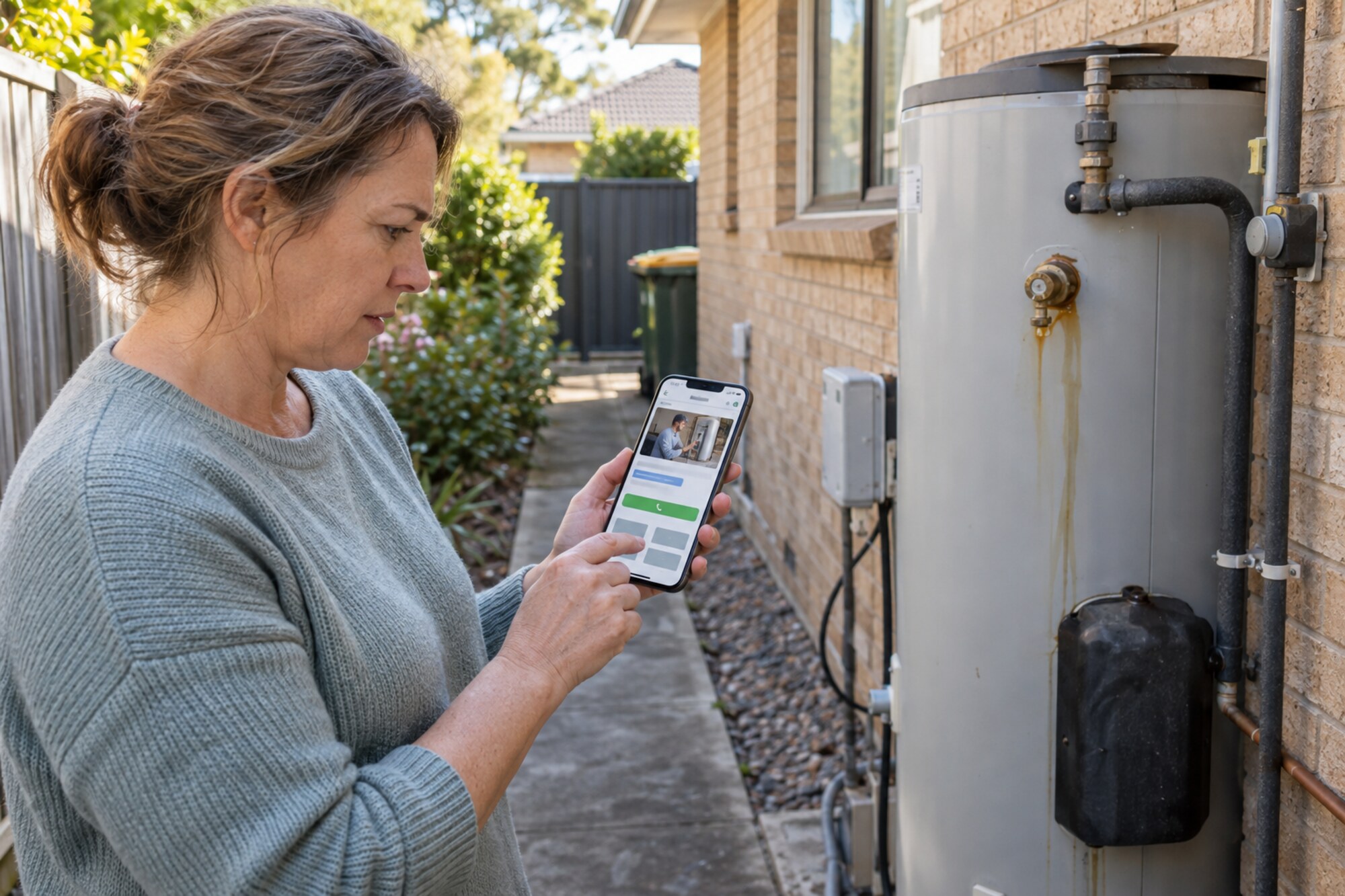
A large share of the people looking for you are on a phone, often on patchy reception, sometimes standing next to the problem they need fixed. Pages that arrive quickly are not a technical nicety in that situation, they are whether the page gets seen at all.
So the sites are built light: no bloated page builders, images sized properly, and the number visible without scrolling. We test on a real handset rather than trusting a desktop preview.
Found for the jobs you want, not just your name
Search is designed in during the build rather than sold back to you afterwards. How the pages are organised, what each one is genuinely about and how they link together is decided while the site is being made, because retrofitting it later costs more and works less well.
That includes a page for each job worth having. Hot water replacements, switchboard upgrades, rewires, backflow testing and the rest are searched by name, and a page that answers the cost and timeframe questions will beat competitors who refuse to answer either.
Our guides go deeper: the pages every plumber, electrician and builder needs, what a tradie website should include and local SEO for plumbers and electricians. Ongoing search work sits under website SEO.
Yours, including the domain
The site, the domain and the hosting are registered in your name with us added as a user. If you ever leave, everything goes with you and nothing has to be rebuilt from scratch.
This catches more tradies out than any other single thing. A site you cannot move, or a domain registered to somebody you have lost touch with, turns an ordinary change of supplier into an expensive problem at the worst possible moment.
FAQ
Frequently Asked Questions
How long does it take to build a tradie website?
Two to four weeks from brief to launch for a straightforward site, and most of that is determined by how quickly content and photos come back rather than by build time. If it needs to be live before a season, start it in the quiet months. Sites commissioned in the middle of your busiest weeks take longest, because nobody has time to review anything.
What does a website for tradies cost?
A straightforward site for a small trade business generally lands in the low thousands, with larger builds going up from there depending on how many services and areas need their own pages. We quote the whole job up front rather than billing hourly, because hourly billing makes every question you ask cost you money. If your budget is fixed, say so at the start and we will tell you what is sensible at that number.
Can I update the website myself?
Yes, and most tradies only ever want to do three things: add a job to the gallery, change the phone number and update their hours. We set those up so they are genuinely easy and show you how before handover. Anything more involved we are happy to do for you, but you will never be locked into paying us for a five minute change.
Do I need a separate page for every suburb I work in?
No, and doing it badly actively hurts. What works is a real page for each area you genuinely service, written properly and saying something different from the others. What does not work is fifteen thin pages with the suburb swapped, which is the pattern Google penalises. For most trades three or four good area pages beat twenty weak ones.
Will it work properly on a phone?
Yes, and that is where we design it first, because that is where your customers are. Tappable phone number, forms that work with one thumb, fast enough to load on mobile data out on a job. We test on a real handset rather than shrinking a desktop browser and calling it mobile friendly.
Can you do my logo and branding as well?
Yes. For most trades that means a mark that still reads on a ute door and at small sizes, one colour, one typeface, and the files you need to get shirts printed and signage made. You get the vector source files and they are yours, which matters the first time you need a signwriter.
Is SEO included, or is it extra?
The structural part is included, because it is decided during the build and cannot sensibly be added later. That covers how pages are organised, what each one targets, internal linking, speed and structured data. Ongoing work to compete for harder terms is a separate service, and we will tell you honestly whether you need it or whether your Google Business Profile is the better place to spend first.
Do I own the website and the domain when it is finished?
Yes, all of it, in your name. The domain, the hosting and the administrator login are yours with us added as a user rather than the other way round. Ask this of anyone you are considering, because a site you cannot take with you is a problem you only discover at the moment you want to leave.
Get a free quote
Ready to start growing your business?
Let's build a website that works as hard as you do.
Contact us now