
Who we are
We design and develop exceptional WordPress, eCommerce and Business Websites, that create amazing value for our clients.
Why Choose Us
Featured Works
In their words
What People Say
Thanks for providing me with ongoing assistance to build my business and being my sounding board. You have done an amazing job with my website and I have received numerous emails about how much easier it is to navigate around the page but also how fantastic it looks.
Naomi - Unome Security
With a massive increase in leads and quotes whats not too like. We have a solid market presence on all our keywords whilst keeping our Google Ads spend down to a minimum. Hiring 7M to run our online and CRM has been a game changer.
Ev - Worm Farm Waste Systems
7 Marketing built our website and helped us strengthen our online presence. The difference has been clear, more enquiries and steady growth in the business. They're professional, transparent, and genuinely focused on helping small businesses succeed.
Alan - Aussie Backflow
What we build
Software, integration and automation that fits how you already work
Most small businesses do not have a software problem. They have six tools that do not talk to each other and a person retyping things between them. We build the custom pieces, connect the systems you already pay for, automate the jobs that quietly eat the week, and show the owner how to run it afterwards. We also say when the answer is to buy something off the shelf instead, which is more often than an agency usually admits.
Custom software, built for one business rather than a market
Off-the-shelf software is built for the average of thousands of businesses, which is why it does nine things you need and two things you cannot live with. For most operators that trade is worth taking, and we will tell you when it is. Custom is worth building when the awkward part is the actual business: the way you quote, the way a job moves through the week, the thing no product has a field for.
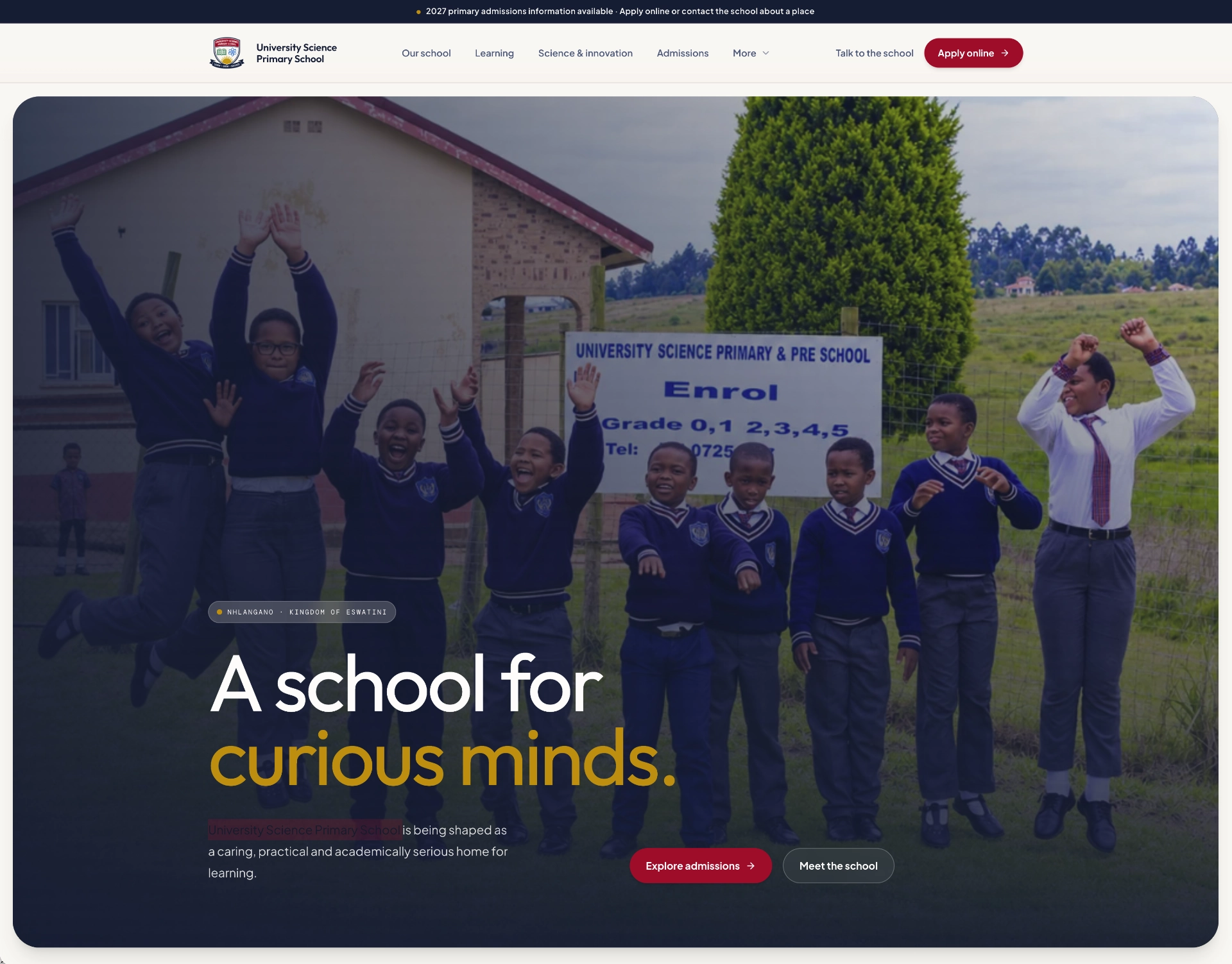
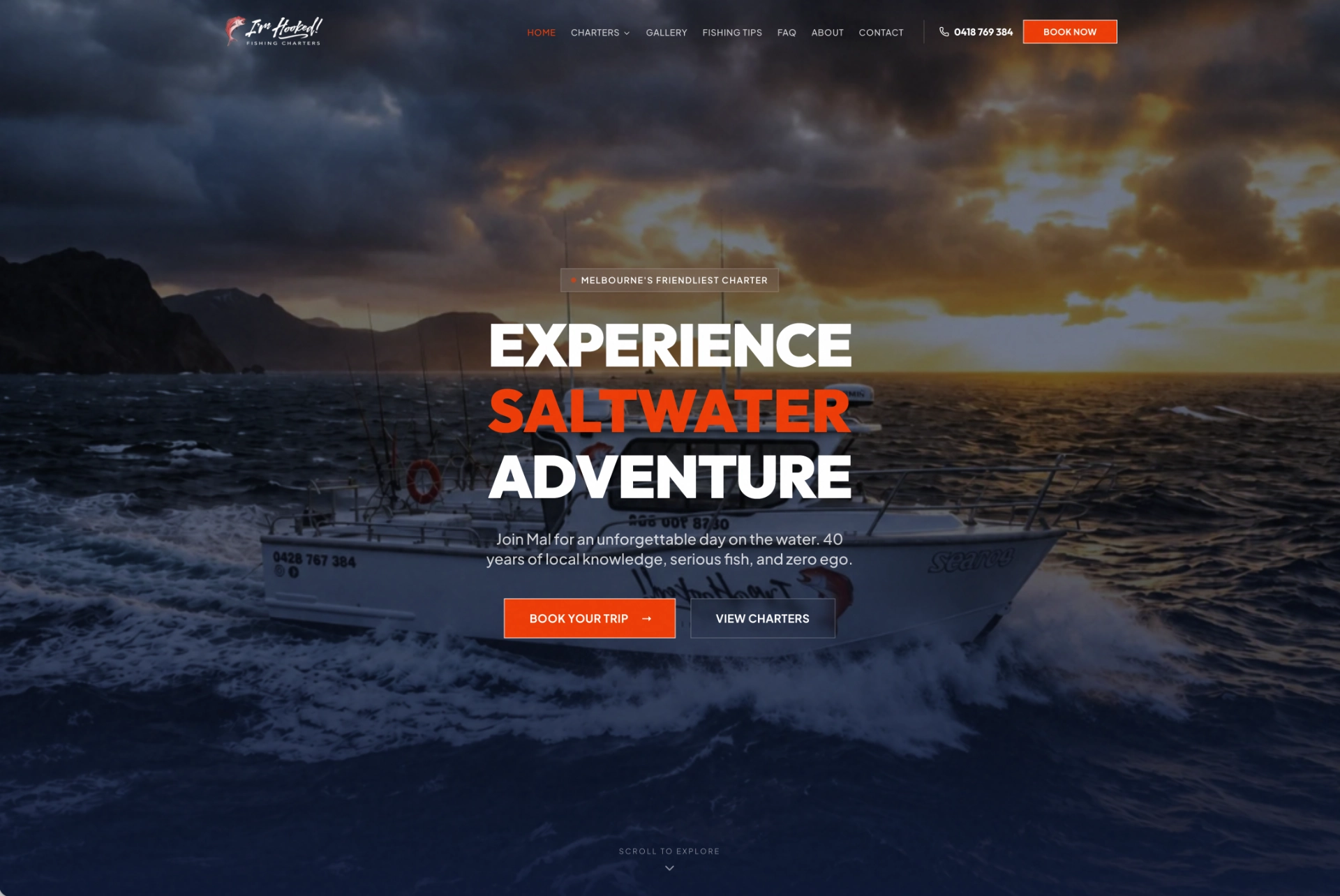
We have built this at both ends of the scale. A fully automated booking system for I'm Hooked Fishing Charters, where availability, group sizes and deposits are handled end to end rather than by phone. An online enrolment system and e-learning platform for University Science Primary School, a school of eighty children in rural Eswatini, built lightweight for the connections it is actually used over.
Built server-rendered and mobile first, on your own accounts and your own hosting, so the thing you paid for is yours and keeps working if we are not in the picture.

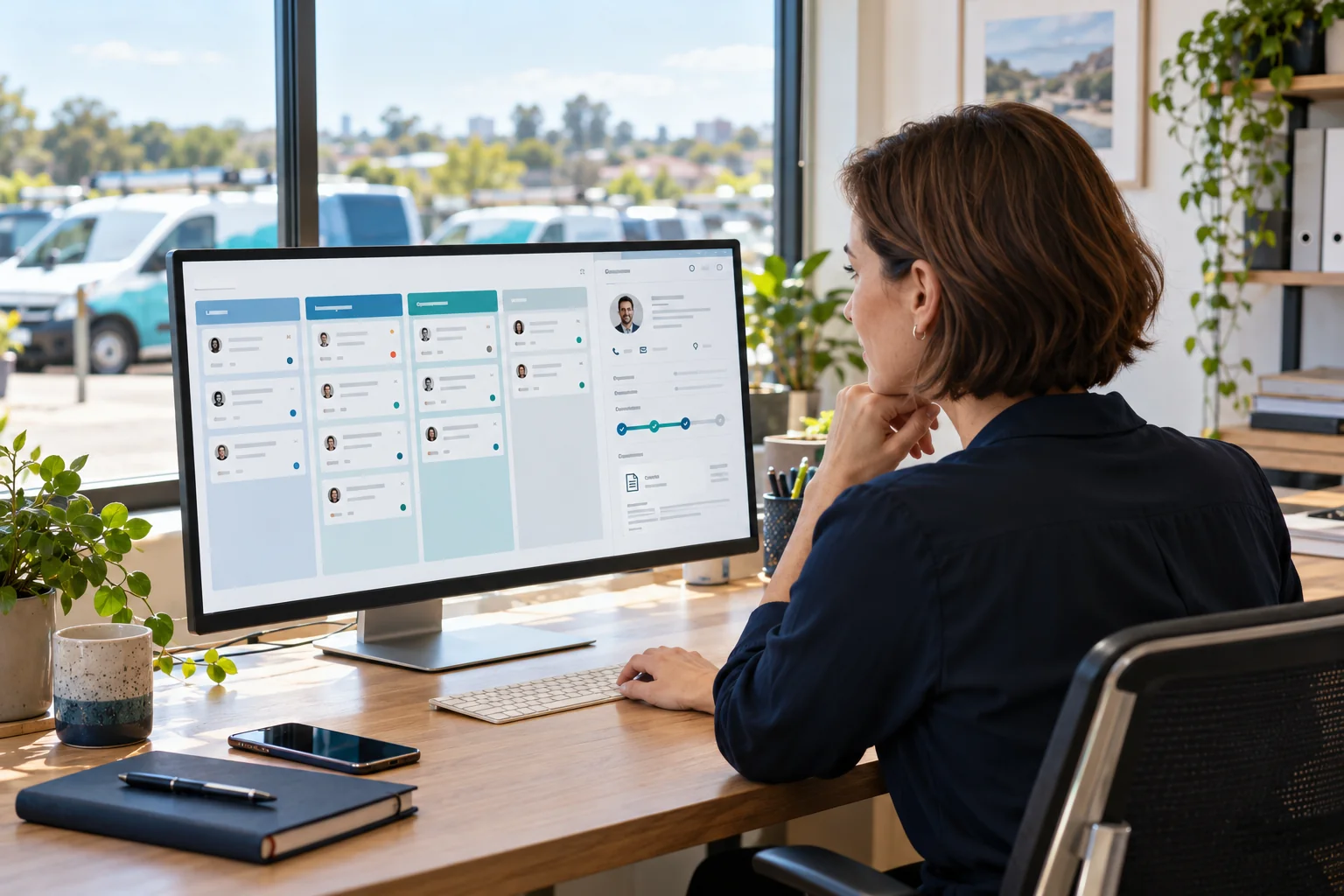
CRM integration, so the same information is not typed twice
The usual picture is an enquiry form that emails somebody, a CRM that somebody updates later, a quoting tool that does not know about either, and accounting software that finds out last. Nothing is broken exactly, it is just that a person is the integration, and that person forgets things on a busy Thursday.
Connecting them properly means an enquiry becomes a record without anybody retyping it, the quote attaches to that record, and the follow-up happens because the system knows it is due rather than because somebody remembered. We work with whatever you already run rather than selling you a migration, because moving CRM is expensive and rarely the actual problem.
This is the work behind Worm Farm Waste Systems, where running the online side and the CRM together is what made the lead volume manageable rather than overwhelming.
Operational automation for the jobs that quietly eat the week
Every small business has a handful of tasks that are individually trivial and collectively a day a week. Copying order details onto a packing slip. Chasing the deposit. Sending the same four reminders. Reconciling two lists that should already agree. None of it needs judgement, all of it needs doing, and it is usually done by whoever is most expensive.
We map where the time actually goes before automating anything, because automating a bad process makes a bad process faster. Then we automate the parts that are genuinely mechanical and deliberately leave the parts that need a person.
One rule we hold to: automation has to fail loudly. A process that silently stops working is worse than no automation at all, because you keep believing it is running. Everything we build tells somebody when it breaks.

Where AI genuinely earns its place, and where it does not
AI is very good at a narrow set of things: reading unstructured text and pulling structure out of it, drafting a first version of something a person will then fix, summarising a pile of material, classifying and routing, and answering questions where being roughly right is useful and being wrong is cheap.
It is poor at anything where being confidently wrong costs you. Pricing. Compliance. Final copy that goes out under your name without a person reading it. Anything involving a number that has to be exactly right. The failure mode is not that it refuses, it is that it produces something plausible and nobody checks.
So we use it where the work is high volume and low risk, and we keep a person in the loop where it is not. If that sounds less exciting than the pitch you have been given elsewhere, that is deliberate.

AI implementation without betting the business on it
The common failure is not that AI does not work, it is that a business adopts six tools in a quarter, nobody owns any of them, two get used for a fortnight and the rest become subscriptions nobody can cancel because nobody is sure what they are connected to.
We start with one job, usually the one costing the most hours, and get that working properly before touching the next. The business keeps running the old way alongside it until the new way has earned the switch. That is slower and it is the reason it sticks.
There is a part owners rarely get told about, so we raise it first: what happens to your customers' information. Which tools send data where, what a vendor is allowed to do with it, what should never go into a chat window, and what your obligations actually are under Australian privacy law. That conversation belongs at the start, not after something has gone out the door.

Training the owner, not just installing the tool
A system the owner cannot drive is a dependency, and we would rather not sell those. The handover is part of the work: how it runs, how to change the parts you will want to change, what to do when it misbehaves, and what it costs to run.
For AI specifically the training is less about tools and more about judgement. Which jobs in your business are worth pointing it at, how to write an instruction that gets a useful answer, how to tell a good output from a confident wrong one, and what should never be delegated to it. Sessions are run with the people who will actually use the thing, in your own workflow, with your own examples rather than a generic demo.
The test we use is simple. Six months after we finish, can the business change the thing without calling us. If the answer is no, we did not finish.

FAQ
Frequently Asked Questions
Does my small business actually need custom software?
Usually not, and we would rather say so in the first conversation than six weeks into a build. Off-the-shelf tools are cheaper, maintained by somebody else and good enough for most of what a small business does. Custom earns its place when the awkward part is the business itself: a quoting method nothing has a field for, a job flow that does not match how any product assumes you work, or a process where the manual workaround costs more every year than the build would once. If an existing product does eighty per cent of it, the honest advice is almost always to take the eighty.
Which CRM do you work with?
Whichever one you already run. Most integration work is connecting the systems a business has rather than replacing them, and a CRM migration is expensive, disruptive and rarely the real problem. We will tell you if the one you are on genuinely cannot do what you need, but that is a much rarer finding than the industry suggests. The usual issue is that nothing is connected to it, not that it is the wrong product.
How much does custom software or automation cost?
It is a project rather than a retainer, so it is quoted as one, and the range is wide because the scope is. A single automation that removes a recurring weekly task is a small piece of work. An integration between two or three systems is larger. A booking or enrolment system with payments behind it is larger again. The way to make the number meaningful is to put a figure on the time the current process costs in a year and compare the two, and if that comparison does not work we will say so.
Is it safe to use AI with our customer information?
It depends entirely on which tool and which data, and it is the question owners ask least often. Different vendors have very different terms about whether your inputs are retained or used for training, and where the data is physically processed. Before anything is adopted we work out what can go into it, what must never, and what your obligations are under Australian privacy law. The safe default is that customer names, contact details, health information and anything commercially sensitive do not get pasted into a general purpose chat tool.
Will AI replace my staff?
Not at the size of business we work with. What it reliably removes is the mechanical part of a job rather than the job, which in a small business usually means the person doing three roles gets one of them back. If somebody is selling you headcount reduction at eight employees, be careful, because the saving is generally smaller than promised and the disruption larger.
What happens when an automation breaks?
It tells somebody, which is the single most important thing to build in. A process that fails silently is worse than no automation, because the business carries on assuming it ran. Everything we build reports its own failures to a person, logs what it did, and can be run manually in the meantime. We also hand over documentation of what is connected to what, so a problem can be diagnosed by somebody who is not us.
Do you train our team or just build it?
Both, and the training is not an optional extra at the end. Sessions run with the people who will actually use the system, in your own workflow and with your own examples rather than a generic demo. For AI specifically the useful training is about judgement rather than buttons: which jobs are worth pointing it at, how to tell a good output from a confidently wrong one, and what should never be delegated to it.
Do we own what you build?
Yes. The code, the accounts, the hosting and the data are yours and set up in your name. If you stop working with us you keep all of it and it keeps running, and we hand over documentation rather than leaving the knowledge on our side. Be careful of any arrangement where the software only works while you keep paying the people who wrote it, because that is a dependency rather than an asset.
Get a free quote
Ready to start growing your business?
Let's build a website that works as hard as you do.
Contact us now