

Searching for a web designer on the Mornington Peninsula turns up a strange mix. A handful of genuine local studios, a larger number of sole traders who also do photography and social media, several Melbourne agencies with a Peninsula landing page and no clients down here, and at least one person who built three sites for friends and now calls it a business. They all present about the same on a homepage.
There is a good generic checklist for sorting that out, and we have already written it. How to choose a website designer in Melbourne covers the parts that apply anywhere: judging a portfolio, the questions worth asking, the red flags, and the freelancer against agency decision.
This is the other half. Five things behave differently when you are hiring down here, and they are the ones that decide whether the build works.
Local does not mean here what it means in Melbourne
In Melbourne, hiring a local designer is reasonable shorthand. The city is dense, most suburbs are half an hour apart, and someone in Richmond genuinely can meet a client in Hawthorn on a Tuesday afternoon.
The Peninsula is not shaped like that. It is roughly an hour from Frankston to Portsea, longer in January when everyone else is on the road. A designer in Frankston is not local to Sorrento in any useful sense. They are an hour away, which is the same as being in Melbourne, except a Melbourne agency will usually admit it and run a proper video call process instead of promising to pop down.
So the word local is doing much less work than people think. What you actually want is one of two things, and it is worth deciding which.
Someone who will genuinely sit across a table from you. Worth paying for if you find the process hard to do over a screen, or if the site depends on photography of your premises. Just be honest about how far they will realistically travel and how often.
Someone who understands the market. This is the one that changes the result. A designer who has worked with Peninsula businesses knows that a Rye trade and a Mount Eliza consultancy sell to different people, that the summer swing is real, and that half the searches for a Sorrento restaurant come from someone in Melbourne planning a weekend. A designer who has never worked down here will assume your customers are your neighbours, and build accordingly.
Market knowledge travels. Driving time does not. If you have to pick one, pick the knowledge.
The question a good designer asks in the first ten minutes
The single most useful test of a Peninsula web designer is whether they ask, early and without prompting, who your customers are and where they are standing when they search.
It sounds obvious. Very few ask it, because the answer changes the whole build and it is easier to sell a website than to sell a strategy. But down here the answer genuinely does split three ways, and we have built all three.
Selling to the people who live here. Gillian Cole Design is an interior designer and project director based in Mornington, with 25 years across private luxury residences, heritage buildings and international exhibition work. That site is judged on taste before a word is read, so it is editorial and photography-led, and it carries case studies rather than a gallery because architecture practices and developers hire on evidence of delivery.
Based here, selling nationally. Worm Farm Waste Systems works out of Dromana and supplies organic waste management systems right across Australia. Almost nothing about that website should be optimised for Dromana. Their customers are rural properties in three states, and a designer who built them a Peninsula-focused local site would have actively cost them money.
Based here, working across the whole area and beyond. Funkesound installs TV antennas, wall mounting and home theatre out of Frankston, covering Melbourne and the Peninsula. That is a service area business, and the site and the local search work have to hold up in a dozen suburbs rather than one.
Same region, three completely different briefs. If the designer you are talking to has not worked out which one you are before they start talking about layouts, they are guessing.
Judge the portfolio by where it ranks, not how it looks
Everyone’s portfolio looks good. That is what a portfolio is for. The useful test costs you ten minutes and tells you something the screenshots cannot.
Pick two or three of the designer’s clients who are roughly like you: similar size, similar sort of business, ideally on the Peninsula. Then search for what those businesses sell, as a customer would phrase it, and do it from a phone rather than your desktop.
Then do it again from somewhere else, either physically or using the location tools in a browser. If the client is a Mornington plumber, check from Mornington, then check from Dromana.
What you are looking for is not perfection. It is whether the site turns up at all outside its own street. A designer whose clients are visible across a genuine service area has built something that works. A designer whose clients look beautiful and appear nowhere has built ornaments.
Two caveats keep this fair. Results vary by person and by moment, so treat it as a signal rather than evidence. And every business ranks strongest near where it actually is, which is a rule of local search rather than a fault of the build. We wrote the long version in why you rank in Mornington but not in Rosebud, and understanding it will stop you blaming a designer for something no designer can change.
While you are there, check the basics: how fast the page arrives on mobile data, whether the phone number is tappable, whether it is obvious what to do next. Google’s SEO starter guide sets out what a competent build should already satisfy.
Commission in winter, not in spring
This is the one that costs Peninsula businesses the most money, and almost nobody raises it.
A large share of trade down here arrives with the summer population. Cafes, accommodation, boat and trailer services, holiday-home maintenance, landscaping, pools, cleaning and half the trades all have a season, and everything else has a quieter version of the same curve.
Now put a realistic build calendar against that. Brief and discovery takes a couple of weeks. Design and revisions, three to four. Build, content and testing, another three to four. Call it eight to twelve weeks from the day you say yes to the day it goes live, assuming you supply content promptly, which most owners do not. Then the site needs several weeks more for Google to crawl, index and settle, and longer again before rankings stabilise.
Add those together and the arithmetic is unforgiving. Commission in June and you are live in August and settled well before November. Commission in October, hoping to be ready for summer, and you will be launching into your busiest six weeks of the year on a site that is still moving, at exactly the moment you have no spare hours to review anything.
Winter is also when you can get a designer’s attention and when you have the hours to write proper content. If someone takes your October brief for a December launch without mentioning any of this, that tells you something too.
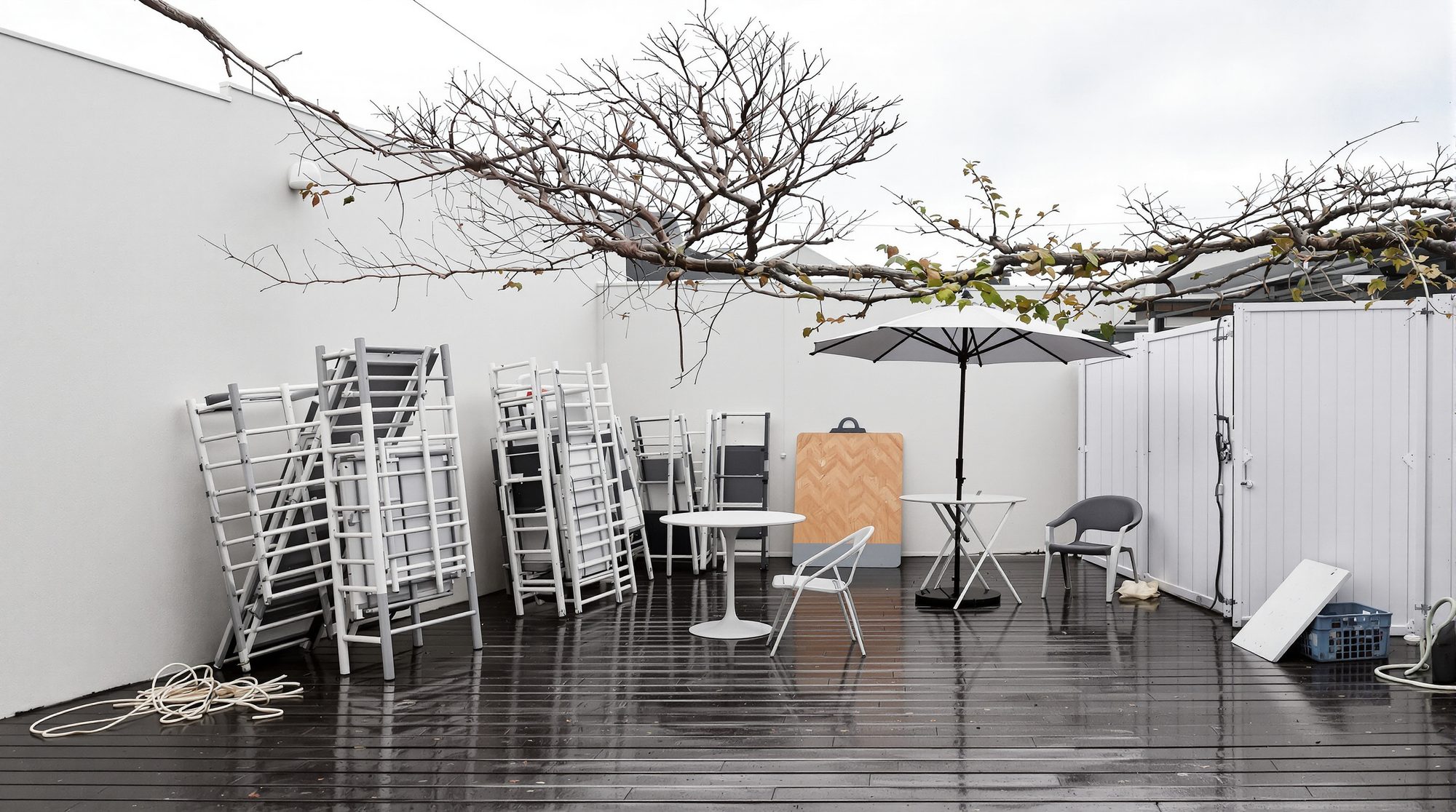 The quiet months are when a build should happen. By the time the tables come back out it is too late to start one.
Hiring someone you will run into at the footy
The Peninsula is a small market, and a lot of hires down here happen socially. Your bookkeeper’s son does websites. Someone at the club built one for the surf shop. The woman who did your neighbour’s site is lovely.
None of that is bad. Local reputation is real information, and a designer who keeps seeing their clients at the supermarket has strong reasons to do decent work. But it makes the ordinary business conversations awkward in a way they are not with a stranger, and the awkwardness is what causes the damage. Owners skip the quote detail because it feels rude, skip the written scope because it feels distrustful, and then cannot chase an overdue site because it would be uncomfortable.
Handle it by making the process obviously standard rather than personal.
- Put it in writing at the start, before anyone is emotionally invested. What is included, what it costs, roughly when, and what happens if it runs over. It is not distrust, it is the thing that protects the friendship when the project drifts.
- Ask the same questions you would ask a stranger. If it feels rude to ask who owns the domain, say plainly that you ask everyone. Anyone reasonable answers without blinking.
- Get a second quote anyway, so you can tell whether the number is normal. Our breakdown of what a website costs on the Mornington Peninsula is a reference point before you look at either.
- Agree what happens if it stalls. A friendly build that goes quiet for three months is the most common way small-market projects fail, and the only cure is having said in advance what you will both do.
What to hold in your own name before anything goes wrong
The generic advice is that you should own your website and domain. Down here that needs sharpening, because the failure mode is rarely a predatory agency locking you in. It is far more mundane. A sole trader takes a full-time job, moves interstate, has a health year, or simply stops answering. It happens in every small market, and it is the most common way Peninsula businesses lose a website.
The protection costs nothing on day one and is almost impossible to retrofit at the point you need it. Before the build starts, make sure all of the following are registered to your own email address with you as the account owner:
- The domain name. Registered in your business name, at a registrar you can log into. This is the one that hurts most to lose, because your email usually depends on it too.
- The hosting account. Even if the designer manages it day to day, the account and the billing should be yours.
- An administrator login to the website itself. Not a contributor account. An administrator, tested once while everyone is still on good terms.
- Your Google Business Profile, with the designer added as a manager rather than the owner. Losing this is worse than losing the site, because the reviews go with it.
- Analytics and Search Console, created under your account with access granted to them.
Then ask one direct question: if you were unavailable for three months, what would I need to keep the site running? A good designer answers it as a sensible question, because they have been asked before. Anyone who bristles has told you something useful.
It is worth checking on a site you already own, too. If yours was built by someone you have lost touch with, work out today what is in your name and what is not, while there is no emergency forcing the issue.
When a designer is not what you need yet
Occasionally the honest answer is that a new website is not the first thing to spend on.
If your Google Business Profile is incomplete, your reviews are three years old, or your hours are wrong over summer, that work is cheaper, faster and will do more for enquiries than a rebuild. Our Google Business Profile checklist covers it, and you can do most of it yourself in an afternoon.
If your existing site is reasonably modern, loads quickly and simply lacks the right pages, that is an editing job rather than a rebuild. When to rebuild your website instead of tweaking it sets out where the line sits.
A designer worth hiring will tell you this unprompted when it is true. It costs them a job and earns them a client, and the ones who understand that are the ones worth having.
Frequently Asked Questions
How do I choose a web designer on the Mornington Peninsula?
Run the same checks you would anywhere. Real recent work, clear pricing, SEO included rather than sold later, and the site and domain in your name. Then add the three that are specific to down here. Ask who your customers are and where they search from, because a Rosebud cafe and a Dromana manufacturer need opposite websites. Test their portfolio by searching their clients’ terms from where your own customers stand, not from your desk. And commission the build in winter so it is indexed and settled before the season it is meant to serve.
Do I need a web designer based on the Mornington Peninsula?
Not really, and the word local is doing less work than people assume. The Peninsula is about an hour end to end, so a designer in Frankston is no closer to Sorrento in practice than one in Melbourne. What matters is whether they understand the market rather than whether they can drive to you. A designer who has never worked down here and assumes your customers are all locals will build the wrong site, and one who genuinely knows the area will build the right one from anywhere.
How much does a web designer charge on the Mornington Peninsula?
Most professional small business sites down here land between $3,000 and $8,000, with simple builds lower and custom or online shop work higher. Quotes vary wildly because they are rarely quoting the same thing. Ask what is included, specifically content, SEO, revisions and support after launch, before you compare two numbers. Our guide to what a website costs on the Mornington Peninsula goes through where the money actually goes.
When is the best time to build a new website for a seasonal Peninsula business?
Winter, for the summer after. A proper build runs roughly eight to twelve weeks from brief to launch, and a new site then needs a further couple of months before search results settle. Start in June or July and you are live, indexed and stable by November. Start in October and you will be launching into your busiest weeks with a site Google is still working out, which is the worst possible timing.
What should I have in my own name before hiring a web designer?
The domain registration, the hosting account and the administrator login to the website, all registered to your own email address with you as the account owner. Add your Google Business Profile, Analytics and Search Console. Give the designer access as a user rather than letting them create anything under their own account. This costs nothing at the start and it is the difference between changing designers in an afternoon and losing your website entirely if a sole trader stops answering the phone.
 The best sign in a first meeting is how much of it the designer spends listening.
The bottom line
The ordinary rules for choosing a web designer still apply on the Mornington Peninsula. Look past the portfolio, get the pricing in writing, make sure search is part of the build rather than an upsell, and own everything at the end.
What changes is the context around them. Local buys less than it sounds like on a peninsula an hour long, so weigh market knowledge above driving distance. The designer worth hiring asks who your customers are and where they search from before talking about design, because that answer builds three different websites. Judge a portfolio by where its clients turn up in search, not by how they look on a screen. Commission in winter, not in spring. And hold your domain, hosting and logins in your own name from day one, because in a market this small the risk is not a bad agency, it is a good sole trader whose circumstances change.
Get those five right and the rest of the decision is much easier than it looks.
You can see the range of what we build across our client projects, including Peninsula work for Gillian Cole Design in Mornington and Worm Farm Waste Systems in Dromana. If you would like to see how we approach it specifically down here, our web design on the Mornington Peninsula page sets out the process and what it costs.
If your website is not turning visitors into customers, request a chat and we will give you a straight answer about what it needs, including if the answer is that you do not need a new one yet. Prefer to start in writing? Get in touch through our contact page and tell us about your business and who you are trying to reach.