
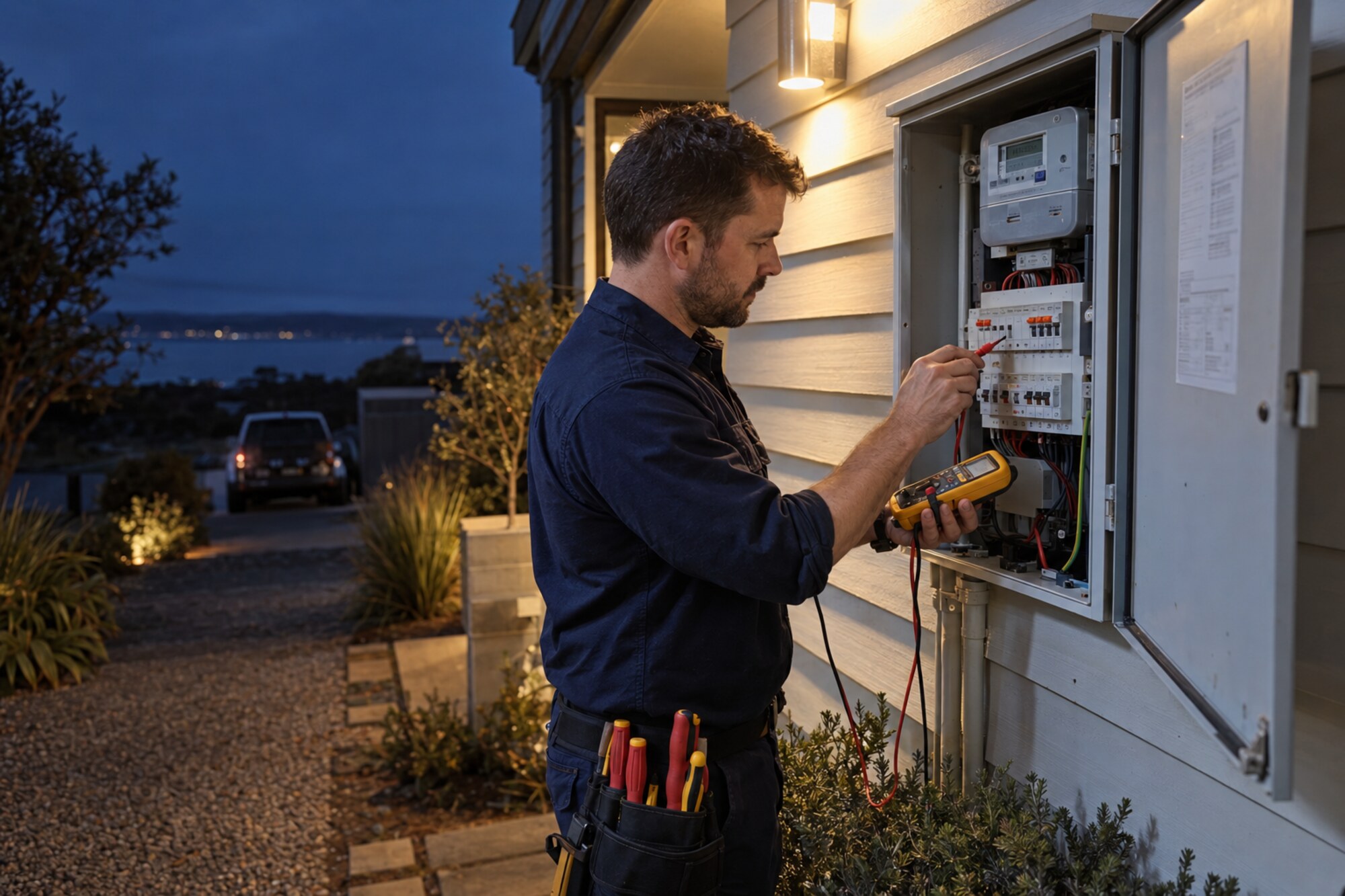
A plumber or an electrician is really running two businesses that happen to share a phone number.
One of them takes calls at eleven at night from somebody standing in water. The other quotes a hot water replacement on a Tuesday afternoon for a customer who has been thinking about it for three weeks. Those are different people, searching differently, deciding differently and worth wildly different amounts of money.
Almost all the local SEO advice aimed at trades treats them as one thing, which is why so much of it lands wrong. This is what changes when you separate them, and what that looks like specifically down here.
We have written the general version already: the local SEO guide for Melbourne small businesses covers the fundamentals, and they all still apply. This is the part specific to these two trades.
The 2am search and the Tuesday search are not the same customer
Watch what each one actually does.
The 2am search. Something has failed. They type “emergency plumber near me” or just “plumber”, they look at the map, and they call the first business that looks plausible and has a number they can tap. They do not read your homepage. They do not compare three quotes. They do not care what your logo looks like. The entire decision takes under a minute and roughly 80 per cent of it is decided before they have clicked anything, by who appeared in the map and who answered.
The Tuesday search. The hot water service is old and getting unreliable, or the switchboard has fuses in it and the insurer has said something. They search “hot water replacement cost”, read two or three pages, look at reviews properly, and get two quotes. This takes days. Everything on your website is in play.
The first is won in the map pack and on the phone. The second is won on your pages. They need different work, and most trades pour everything into the first because it feels more urgent, which is the wrong way round for reasons we will come to.
Winning the 2am search without lying about it
The emergency half is almost entirely a Google Business Profile job. Your website barely features.
Proximity decides most of it. Google weights how close the searcher is standing more heavily than anything else in local results, which means your emergency catchment is much smaller than your service area. On a peninsula an hour long, that is unforgiving: a Mornington plumber will not appear for a Rye search at midnight no matter how good their site is. We went through exactly why in why you rank in Mornington but not in Rosebud, and it is the single most useful thing to understand before spending money here.
Hours are a ranking factor, not just information. Businesses shown as open are favoured in results when someone searches out of hours. This is the one genuine lever most trades never touch.
But do not claim hours you do not keep. Setting yourself to 24 hours when the phone goes to voicemail at 3am is the fastest way to collect a one star review from somebody whose laundry is flooding, and those reviews get read. Set the hours you actually cover. If that is until 9pm on weeknights, say so.
Make the number tappable and answer it. It sounds beneath mentioning, and it is still the most common failure. A phone number as an image, or buried in a footer, loses jobs at 2am.
It is worth picturing the whole sequence once, because it is shorter than most trades think. Screen lights up, map appears, three businesses listed, thumb hits the first number, ring, ring, ring, back to the map, second number. That is the entire funnel. Everything you might want to say about your work happens after somebody has already said yes.
Your profile does the work, so fill it in properly. Categories, service areas, photos, the questions people ask. Our Google Business Profile checklist is an afternoon and costs nothing, and for this half of the business it matters more than your website does.
The jobs that actually pay
The planned work is where the website earns its keep, and it is searched completely differently.
People look up these jobs by name: hot water system replacement, switchboard upgrade, safety switch installation, rewiring an old house, backflow prevention testing, adding power to a shed. Each of those deserves a real page that answers what it costs, how long it takes and what is involved, because almost none of your competitors will answer the cost question and that is precisely why answering it works.
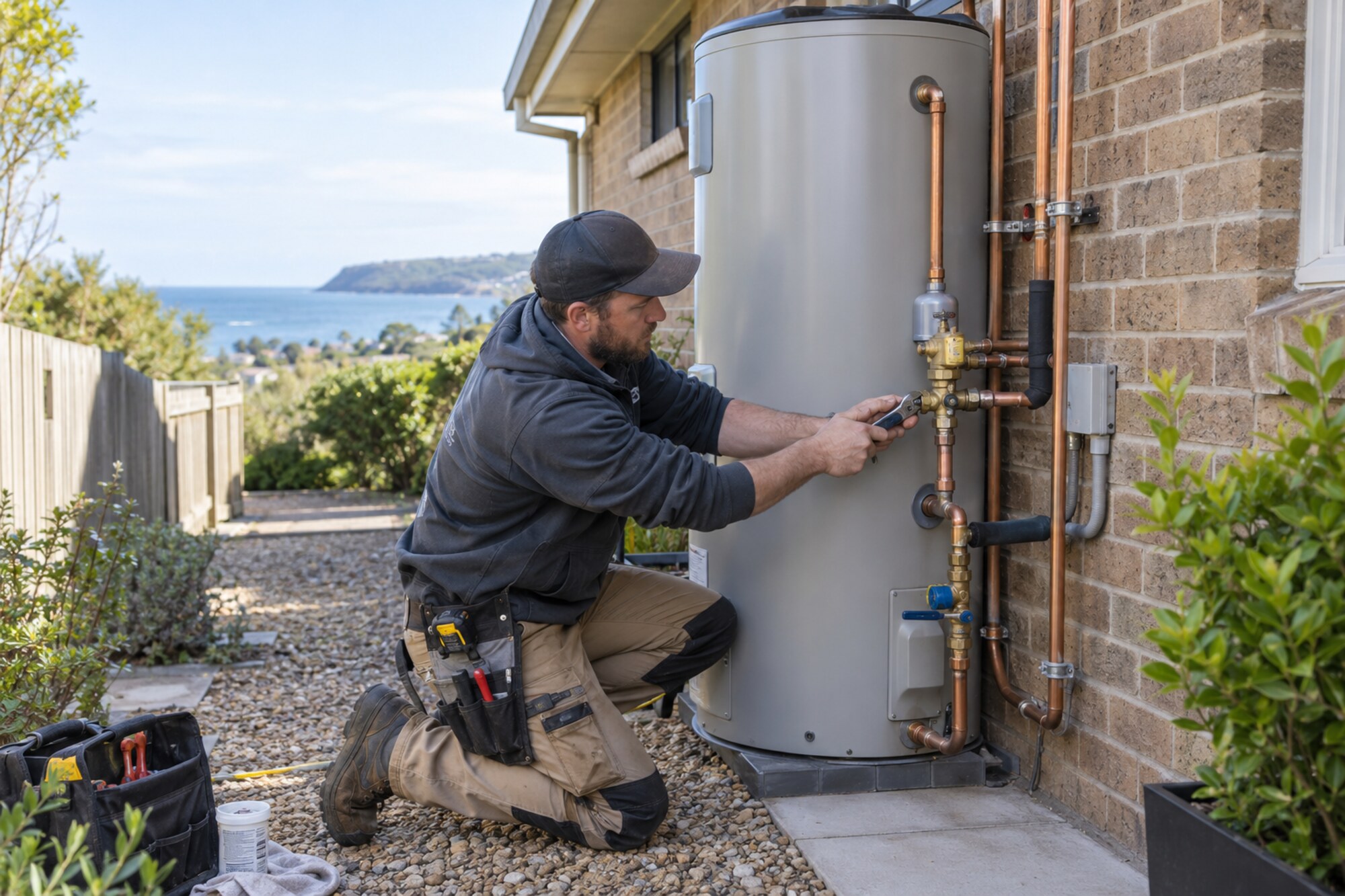 A hot water replacement is searched by name, compared properly and worth many times a callout. That is a job a website can actually win for you.
This is also where reviews do their heaviest lifting. Somebody choosing who rewires their house reads reviews properly, and a recent review that names the job and the suburb is worth a dozen generic five star ratings. Why reviews matter for local SEO covers how to ask without it being awkward.
Backflow prevention is a good example of how narrow and winnable these can be. It is a compliance job, it recurs annually, it is searched by name by people who have been told they need it, and hardly anyone writes a decent page about it. We built Aussie Backflow around exactly that kind of specific, recurring work rather than chasing general plumbing traffic.
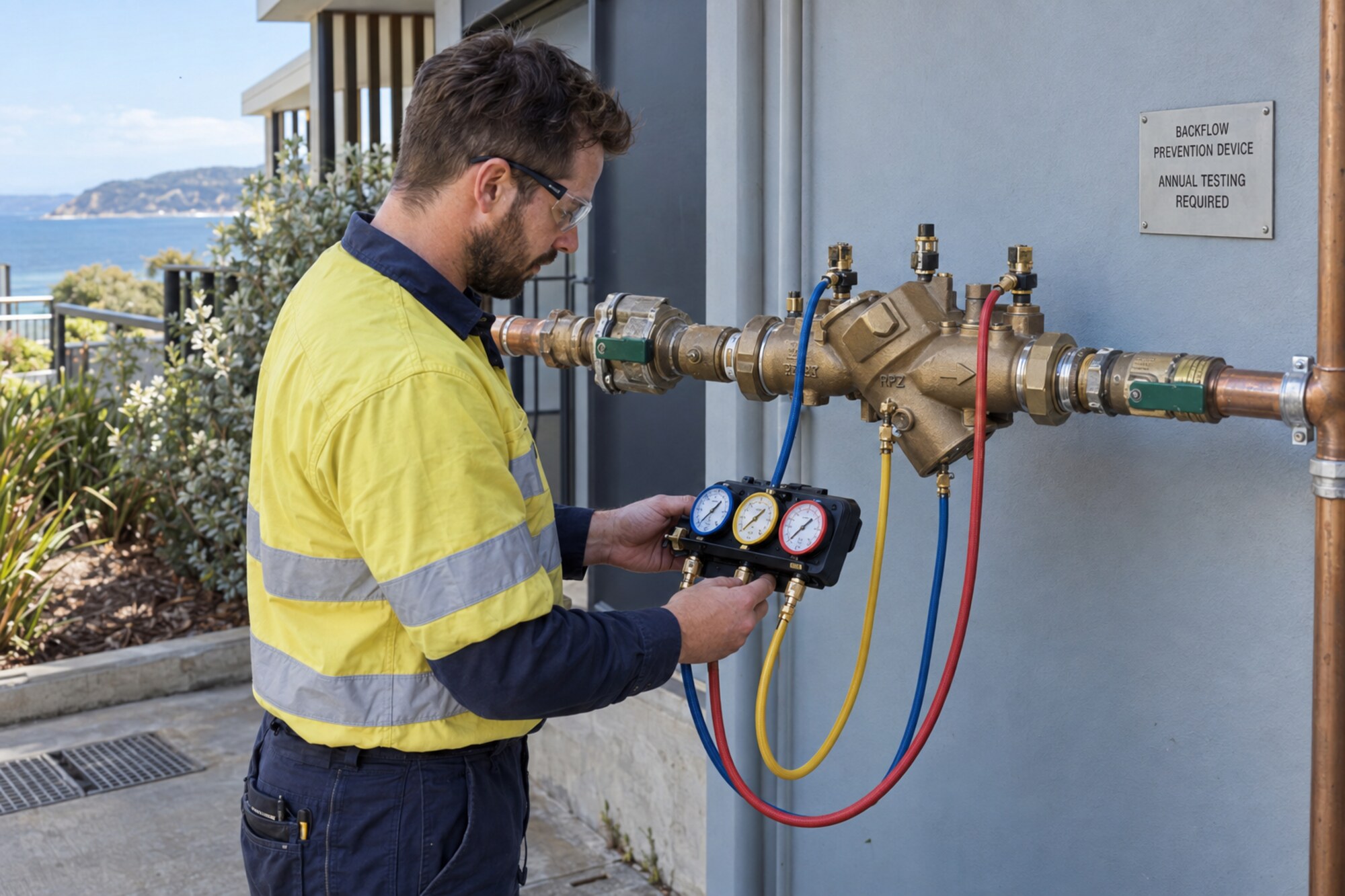 Compliance work like backflow testing recurs every year, is searched by name, and almost nobody writes a decent page about it.
For the page structure across both halves, the best website pages for plumbers, electricians and builders lays it out properly.
What the Peninsula does to both halves
Two things down here change the shape of this.
The summer influx multiplies the emergency half. Houses that have sat still for six months come back into use all at once. Burst pipes, dead hot water services, tripped safety switches, pumps that have seized. For six weeks the emergency call volume is unrecognisable, and it collapses again in March.
The person calling often does not own the house. A neighbour has noticed water running down the driveway. An agent has had a complaint. A cleaner has arrived to find no power. They cannot tell you the age of the unit, they cannot authorise much, and they are not the one paying. Trades who handle that call smoothly, and who can get access, get the repeat work, because the owner in Melbourne remembers who sorted it out without needing them.
Both of these push in the same direction: in summer, your profile and whoever answers the phone matter far more than anything on your website. In winter, the reverse. It is worth putting the effort where it counts in each season rather than spreading it evenly.
The trust signals you have and almost never use
This is the part genuinely unique to these two trades, and it is close to free.
A plumber or an electrician is licensed. A landscaper, a handyman or a cleaner is not, in the same way. That difference matters enormously to a customer who is quietly worried about getting an unlicensed operator into their house, and it is a worry that goes up, not down, when the caller is organising work on a property from ninety minutes away.
So put it where people can see it:
- Your licence number, in the footer and on the about page. Plumbing licensing in Victoria runs through the Victorian Building Authority, and electrical work through Energy Safe Victoria.
- The compliance certificate you issue, explained in a sentence, so people know they get one and what it is for.
- Insurance, stated plainly.
- How long you have held the licence, if it has been a while.
- A photo of you, which sounds soft and is not. Someone handing over a key to an empty house wants to know who is turning up.
None of this ranks you directly. All of it converts, and conversion is what turns the rankings you already have into work. It also tends to be the deciding factor between two quotes that are within a couple of hundred dollars of each other.
Which half is actually worth chasing
Here is the part that goes against the grain of most advice aimed at trades.
Emergency work feels like the prize because it is urgent and the phone rings. But look at it honestly. It is proximity-bound, so you can only ever win it close to home. It arrives at inconvenient hours and wrecks the next day’s schedule. The job is usually small. The customer is price-insensitive in the moment and price-sensitive the following week. And you are competing with whoever happens to be nearest, which is not a competition you can win with effort.
Planned work is the opposite on every count. It is searched during business hours, compared properly, worth several times as much per job, schedulable, and winnable on the strength of your pages rather than your postcode. It also compounds: a page about switchboard upgrades that ranks keeps producing work for years.
So if your time and budget only stretch one way, put it into the planned half and treat the emergency half as a profile hygiene job. Claim the profile, set honest hours, answer the phone, and stop there.
The arithmetic usually settles it. A callout might be a couple of hundred dollars and cost you an evening plus a slow start the next morning. A hot water replacement or a switchboard upgrade is often ten to twenty times that for a scheduled half-day. You do not need many of the second kind to outweigh a month of the first, and the second kind is the one a website can actually win for you.
The exception is if emergency work genuinely is your model, you are set up for it, somebody is rostered on and the margins work. Then it is a different calculation and the proximity limits become the thing to plan around, usually by being deliberately dense in a few suburbs rather than thin across the whole Peninsula.
Frequently Asked Questions
Should I set my Google Business Profile to open 24 hours?
Only if somebody actually answers at 3am. Setting 24 hour availability does make you eligible to appear in overnight searches, which is the attraction, but the call still has to be picked up. A profile that says 24 hours and goes to voicemail earns you a one star review from someone whose kitchen is flooding, and those are the reviews people read most closely. If you take after-hours calls three nights a week, set the hours you genuinely cover and let the phone do the rest.
Is it worth trying to rank for emergency plumber searches?
Less than most trades assume. Emergency work is proximity-dominated, so you will only ever win it within a few suburbs of where you are, and it is the most disruptive and least profitable work you do. The planned jobs, hot water replacements, switchboard upgrades, rewires and backflow testing, are searched more deliberately, compared properly and worth several times as much. If your effort has to go one way, put it there.
What local SEO do plumbers and electricians have that other trades do not?
Licences and compliance paperwork. A plumbing or electrical licence number, the compliance certificates you issue and your insurance are genuine trust signals that a landscaper or a handyman simply cannot offer, and almost nobody puts them on the website. Showing them costs nothing and separates you from the unlicensed operators your customers are quietly worried about.
How does the summer influx change local search on the Peninsula?
It multiplies the emergency half and barely touches the planned half. Holiday houses come out of six months of standing still, which produces burst pipes, dead hot water services and tripped safety switches, often reported by a neighbour or an agent rather than the owner. Your profile, your hours and whoever answers the phone matter far more in January than anything on your website.
Do I need separate pages for each service?
For the planned work, yes. Hot water, switchboard upgrades, rewiring and backflow testing are each searched by name and deserve a real page that answers the cost and timeframe questions. For the emergency work one good page is plenty, because nobody in that situation is reading anything. Our guide to the best website pages for plumbers, electricians and builders sets out the structure.
The bottom line
Stop treating these as one business. The 2am call is won on your Google Business Profile, your honest opening hours and whoever picks up the phone, and it is capped by how close you happen to be. The Tuesday quote is won on pages that name the job and answer the cost question, backed by reviews and by the licence details your competitors leave off.
If you only do three things: fill in the profile properly, write a real page for each of the planned jobs you actually want, and put your licence number somewhere a nervous customer can find it.
You can see the approach in our client work, from Aussie Backflow in compliance plumbing to Inner City Plumbing in a busier metro market, and across our client projects. How we do this specifically down here is set out on our Peninsula SEO and websites for tradies pages.
If you are not sure which half of your business is actually short of work, request a chat and we will look at the numbers with you before recommending anything. Prefer to start in writing? Get in touch through our contact page.